
Why Are Businesses Outsourcing Technical Support in 2026?
Discover why businesses are outsourcing technical support in 2026 to improve scalability, uptime, cybersecurity, and customer service.
5/13/20265 min read
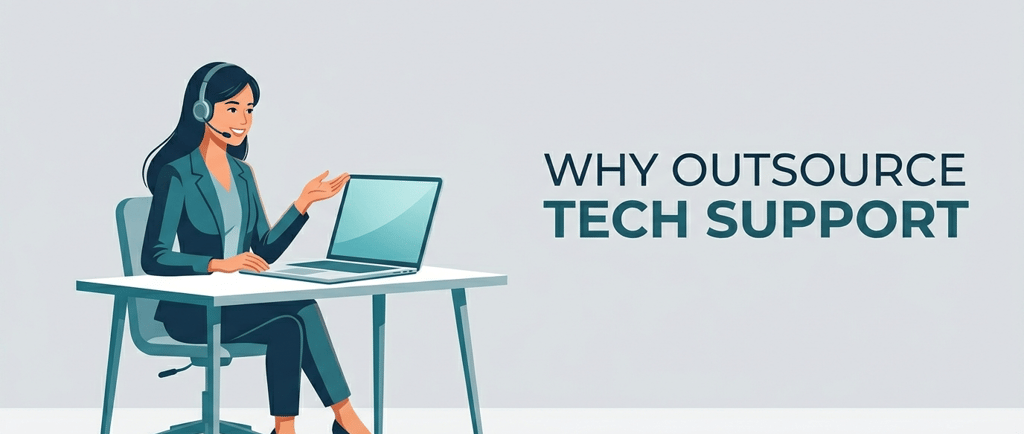
Businesses are outsourcing technical support in 2026 to reduce operational strain, maintain 24/7 service continuity, and access specialized expertise without building large in-house teams. Rising cybersecurity risks, hybrid work environments, AI-powered systems, and customer expectations for instant issue resolution have made technical support more complex than it was even three years ago.
Organizations now prioritize scalability, multilingual support coverage, and faster response times over maintaining costly internal support departments. Experience across customer service operations and IT support environments shows that outsourcing improves ticket resolution consistency when managed with clear service-level agreements, structured escalation paths, and workforce monitoring systems.
What Changed in Technical Support During 2026
Technical support requirements shifted significantly due to increased cloud adoption, remote workforce management, and AI integration into daily business operations.
According to Gartner, global spending on IT services continues to rise as businesses modernize infrastructure and expand managed support models. Meanwhile, research from Statista shows that customer expectations for immediate digital support have increased across industries, especially in e-commerce, SaaS, healthcare, and logistics.
The biggest operational change is complexity. Modern support teams now manage:
Cloud applications
Cybersecurity incidents
Remote device troubleshooting
AI tool integration
Omnichannel customer communication
System uptime monitoring
Internal teams often struggle to maintain expertise across all these areas simultaneously.
Key Reasons Businesses Are Outsourcing Technical Support
Faster Access to Specialized Expertise
Technical issues now involve cloud environments, cybersecurity protocols, API integrations, and remote infrastructure. Outsourced teams usually maintain specialists across these areas instead of relying on general IT staff.
Common Technical Support Challenges and Outsourcing Advantages
Cloud Infrastructure
Common Internal Challenge: Limited in-house expertise
Outsourced Support Advantage: Dedicated cloud-certified teams
Cybersecurity Monitoring
Common Internal Challenge: Slow incident response
Outsourced Support Advantage: 24/7 monitoring coverage
Help Desk Operations
Common Internal Challenge: Ticket backlog during peak periods
Outsourced Support Advantage: Scalable staffing models
Software Troubleshooting
Common Internal Challenge: Inconsistent escalation process
Outsourced Support Advantage: Standardized workflows
Multi-language Support
Common Internal Challenge: Limited language coverage
Outsourced Support Advantage: Global workforce availability
Continuous Support Availability
Many businesses now operate across multiple regions and time zones. Technical disruptions outside working hours can interrupt sales operations, customer communication, and employee productivity.
Outsourced support models provide round-the-clock issue handling without requiring internal overnight staffing.
Bonus Tip: Businesses handling international customers should verify whether outsourced teams follow follow-the-sun support scheduling instead of relying on a single regional support hub.
Better Scalability During Growth
Rapid business expansion often overwhelms internal IT teams. Outsourced support providers can increase staffing faster during:
Product launches
Seasonal traffic spikes
System migrations
Remote onboarding periods
Security incidents
This flexibility reduces operational disruption during growth phases.
Reduced Operational Complexity
Managing an internal support department involves recruitment, workforce training, compliance management, ticketing systems, and performance monitoring. Outsourcing shifts much of that administrative burden to specialized providers.
According to Deloitte, operational efficiency remains one of the primary drivers behind outsourcing decisions globally.
How Outsourced Technical Support Compares to In-House Teams
Staffing Flexibility
In-House Technical Support: Slower hiring and onboarding cycles
Outsourced Technical Support: Rapid workforce scaling based on operational demand
Coverage Hours
In-House Technical Support: Limited by internal shift schedules
Outsourced Technical Support: 24/7 support availability across multiple time zones
Technology Exposure
In-House Technical Support: Experience limited to internal systems and tools
Outsourced Technical Support: Broader exposure to diverse industries and technologies
Training Requirements
In-House Technical Support: Training managed internally by the organization
Outsourced Technical Support: Ongoing training handled by the service provider
Infrastructure Monitoring
In-House Technical Support: Often reactive and issue-driven
Outsourced Technical Support: Typically proactive with continuous monitoring processes
Disaster Recovery Support
In-House Technical Support: Limited redundancy and backup resources
Outsourced Technical Support: Distributed support teams with stronger continuity planning
Technical Support Functions Businesses Commonly Outsource
Help Desk Management
First-line troubleshooting, password resets, ticket routing, and software support are commonly outsourced to improve response speed.
Infrastructure Monitoring
External teams monitor server uptime, application performance, and security alerts continuously.
Customer-Facing Technical Assistance
Businesses increasingly outsource live chat, email support, and remote troubleshooting to maintain consistent customer experiences.
Remote Workforce Support
Hybrid work environments require constant device support, VPN troubleshooting, and access management across distributed teams.
Operational Metrics Businesses Track Before Outsourcing
First Response Time: Measures how quickly customers receive initial support assistance.
Average Resolution Time: Evaluates operational efficiency and issue-handling performance.
Ticket Escalation Rate: Helps identify technical support gaps and unresolved issue patterns.
System Downtime Frequency: Reflects overall infrastructure stability and service reliability.
Customer Satisfaction Score: Measures the quality of support experiences and customer confidence.
Remote Resolution Percentage: Indicates the efficiency of resolving issues without on-site intervention.
Bonus Tip: Many businesses underestimate escalation rates during vendor evaluation. Reviewing historical ticket escalation patterns before outsourcing prevents unrealistic service expectations later.
Factors That Matter Before Outsourcing Technical Support
Choosing an outsourced support provider requires operational evaluation beyond staffing size.
Industry Familiarity
Support requirements differ significantly between industries. Healthcare, logistics, SaaS, and retail businesses all require different escalation workflows and compliance standards.
Security and Compliance Standards
Businesses handling customer data should verify:
Access control procedures
Incident response protocols
Data handling standards
Employee background verification
Compliance certifications
Integration With Existing Systems
Outsourced teams should integrate smoothly with current ticketing systems, CRMs, communication platforms, and monitoring tools.
Escalation Transparency
Poor escalation management causes delays and customer frustration. Businesses should review how providers classify urgent incidents and communicate updates.
Bonus Tip: Request sample escalation workflows before signing agreements. This exposes gaps in communication structure early.
Relevant Business Support Services That Improve Technical Operations
Workforce Acquisition
RD Global Business Solution supports workforce acquisition processes that help businesses maintain scalable technical and operational staffing structures.
Customer Support
Structured customer support operations improve issue tracking, communication consistency, and response management across multiple channels.
IT & Tech Support
Technical support services assist businesses with troubleshooting workflows, infrastructure monitoring, and operational continuity.
Data Management
Organized data handling processes improve reporting accuracy, workflow visibility, and support ticket documentation.
Questions Businesses Ask Before Choosing Outsourced Support
How quickly should technical issues be escalated?
Critical infrastructure failures should follow immediate escalation paths with clearly assigned response ownership. Lower-priority tickets can use staged escalation workflows.
Does outsourced support reduce internal IT teams?
Most businesses use outsourcing to extend internal capabilities rather than fully replace internal teams. Internal staff usually retain strategic and infrastructure oversight responsibilities.
Which industries benefit most from outsourced support?
Industries with remote operations, digital platforms, or customer-facing systems often see the greatest operational benefits.
Should support providers offer multilingual assistance?
Businesses serving international customers usually benefit from multilingual support coverage to reduce communication delays.
Long-Term Questions Businesses Often Face
How can outsourced technical support maintain service quality?
Consistent KPIs, routine audits, ticket analysis, and escalation reviews help maintain service quality over time.
What causes outsourced support partnerships to fail?
Poor onboarding, unclear workflows, weak communication standards, and undefined escalation ownership commonly create operational failures.
How often should support procedures be updated?
Support workflows should be reviewed quarterly to address software changes, cybersecurity risks, and operational growth.
Can outsourced support handle cybersecurity incidents?
Some providers offer specialized cybersecurity monitoring, while others only manage general technical troubleshooting. Businesses should verify scope clearly.
What is the biggest operational risk during outsourcing transitions?
Knowledge transfer failures create the largest disruption risk. Incomplete documentation often leads to repeated ticket delays and inconsistent support handling.
Conclusion
Technical support outsourcing in 2026 is primarily driven by operational complexity, workforce scalability needs, cybersecurity pressure, and rising customer expectations. Businesses that establish clear escalation standards, realistic KPIs, and structured onboarding processes typically achieve stronger long-term support outcomes.
Decision-makers should evaluate technical expertise, workflow transparency, system compatibility, and communication standards before selecting a support model.
Speak With RD Global Business Solution
Businesses evaluating outsourced operational support can discuss workforce structure, customer support processes, and technical support requirements with RD Global Business Solution. For business inquiries or operational guidance, contact info@rdglobalbizsol.com or call +971 56 624 9846 to review suitable support structures based on operational requirements and long-term business goals.
Empowering your business with operational excellence solutions.
Al Moosa tower - 810 - 1 Sheikh Zayed Rd - Dubai







Solutions
Company
Contact
© 2026 RD Global Solutions. All Rights Reserved.


+971 56 624 9846

info@rdglobalbizsol.com