
Top Benefits of Virtual Offices for International Businesses
Discover how virtual offices help international businesses expand faster, reduce costs, and manage remote teams while building strong global presence.
5/21/20265 min read
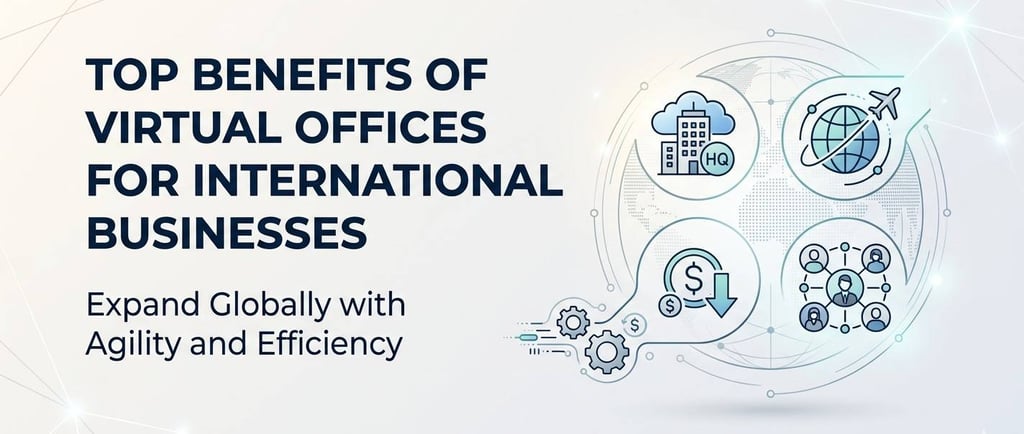
International businesses use virtual offices to establish a professional business presence in foreign markets without maintaining a permanent physical office. The biggest advantages include operational flexibility, faster market entry, easier workforce coordination, lower administrative complexity, and improved regional credibility. For companies expanding into markets such as the UAE, virtual offices also help meet licensing and communication requirements while supporting remote operations across multiple time zones.
Businesses managing cross-border operations often face challenges related to compliance documentation, customer accessibility, remote employee coordination, and administrative continuity. This article explains how virtual offices address these operational concerns, what practical benefits they offer, and which factors decision-makers should evaluate before choosing a setup structure. The information is based on operational business setup practices commonly used in international expansion planning.
Why international businesses use virtual offices?
Virtual offices solve a practical problem for international companies: maintaining a reliable operational presence without committing to long-term physical infrastructure.
For global businesses entering regions like the UAE, Singapore, or the UK, establishing a local communication address and administrative support system often becomes necessary before hiring staff or onboarding regional clients. A virtual office allows companies to:
Maintain a professional business address
Handle mail and administrative communication
Support remote workforce management
Improve accessibility for international customers
Reduce operational disruptions during expansion phases
According to a 2025 report by the International Workplace Group (IWG), hybrid and remote operational models continue to expand globally as businesses prioritize flexibility and distributed workforce management. Similarly, data from Gartner indicates that remote-enabled operational structures remain a long-term business strategy rather than a temporary adjustment.
Core operational benefits for international companies
Faster regional market entry
International businesses frequently require a local operational presence before conducting formal activities in a foreign market. Virtual offices simplify this process by providing administrative infrastructure without waiting for full office procurement.
This becomes especially useful for:
Market testing in new regions
Cross-border partnerships
Early-stage expansion planning
Remote workforce onboarding
Temporary operational launches
Improved operational flexibility
Virtual offices support distributed teams across different regions and time zones. Businesses can centralize communication while allowing employees to work remotely from different locations.
This structure reduces dependency on one physical office and improves continuity during:
Travel restrictions
Workforce relocation
Seasonal operational changes
International project scaling
Reduced administrative complexity
International companies often struggle with document handling, communication management, and regulatory correspondence in unfamiliar markets.
A structured virtual office setup helps organize:
Mail handling
Prevents missed government or client communication.Business address registration
Supports licensing and documentation requirements.Call management
Improves customer accessibility.Document coordination
Simplifies remote approvals and workflows.Meeting room access
Supports occasional in-person operations.
Better customer trust in regional markets
Customers and suppliers typically respond more positively to businesses with a recognized local presence. A professional business address improves legitimacy during vendor negotiations, partnership discussions, and onboarding processes.
This is particularly relevant in highly regulated business hubs such as the UAE, where regional accessibility often influences commercial trust.
How virtual offices compare with traditional office structures?
Operational comparison for international expansion planning
Physical office maintenance
Virtual Office: Minimal
Traditional Office: High
Workforce flexibility
Virtual Office: High
Traditional Office: Moderate
Market entry speed
Virtual Office: Faster
Traditional Office: Slower
Administrative overhead
Virtual Office: Lower
Traditional Office: Higher
Geographic scalability
Virtual Office: Easier
Traditional Office: More restrictive
Remote team support
Virtual Office: Strong
Traditional Office: Limited
Infrastructure dependency
Virtual Office: Low
Traditional Office: High
Technical requirements businesses should evaluate
Important operational features in a virtual office setup
Business address legitimacy
Supports regulatory documentation and strengthens vendor trust.Mail forwarding systems
Prevents delays in official communication and important correspondence.Secure document handling
Protects sensitive company information and operational records.Communication support
Maintains business accessibility across different regions and time zones.Workforce compatibility
Supports distributed employee operations and remote collaboration.IT coordination capabilities
Enables remote access, system continuity, and workflow management.Meeting room availability
Helps during compliance reviews, client discussions, or occasional in-person meetings.
Bonus tip
Businesses expanding into the UAE often benefit from selecting a virtual office provider familiar with regional licensing workflows. This reduces delays caused by incomplete documentation or communication gaps during setup stages.
Operational areas that benefit most from virtual offices
Certain departments adapt especially well to virtual office structures because they rely heavily on digital coordination rather than physical infrastructure.
Virtual Office Suitability: High
Common Operational Use: Remote communication handling
IT & Tech Operations
Virtual Office Suitability: High
Common Operational Use: Distributed infrastructure management
Administrative Coordination
Virtual Office Suitability: High
Common Operational Use: Documentation and workflow processing
Virtual Office Suitability: Moderate to High
Common Operational Use: Remote hiring and onboarding
Data Management
Virtual Office Suitability: High
Common Operational Use: Digital records and workflow continuity
According to Flex Index workforce research published in 2025, globally distributed operational models continue increasing among international service-based companies, particularly in technology, consulting, and customer support sectors.
Bonus tip
Before finalizing a virtual office structure, businesses should test communication response times across different time zones. Delayed customer or regulatory communication often creates larger operational issues than infrastructure limitations.
Business support areas commonly integrated with virtual offices
RD Global Business Solution supports several operational functions commonly connected with virtual office environments for international businesses.
Virtual Office Setup
Supports companies requiring a compliant business address and administrative communication structure for remote operations.Workforce Acquisition
Assists businesses managing distributed hiring and remote onboarding processes across regions.Customer Support
Helps maintain communication continuity through managed customer interaction systems.IT & Tech Support
Supports remote operational infrastructure, system accessibility, and technical continuity.
Key considerations before choosing a virtual office structure
Businesses should evaluate operational compatibility rather than selecting a setup based only on convenience.
Important decision-making factors
Regulatory compatibility
Ensures alignment with local business requirements and compliance standards.Communication management
Prevents missed client interactions, legal notices, and operational delays.Data security standards
Protects sensitive operational records and confidential business information.Workforce structure
Determines the efficiency of remote employee management and coordination.Regional scalability
Supports future expansion plans across multiple locations or markets.Technology integration
Reduces operational disruption by supporting existing digital systems and workflows.Administrative responsiveness
Improves day-to-day operational continuity and communication handling.
Common questions decision-makers ask before selecting a setup
Does the virtual office support international communication needs
Businesses operating across time zones should confirm response handling procedures, mail forwarding systems, and communication accessibility before setup approval.
Can remote employees operate effectively within this structure
Virtual office systems work best when businesses already use cloud-based workflows, centralized communication tools, and digital document management.
Is a virtual office suitable for long-term expansion
Many international companies initially use virtual offices during market entry phases and later transition to hybrid operational models depending on workforce growth.
Bonus tip
Businesses handling sensitive customer records should verify whether document access controls and data management procedures comply with regional privacy regulations before onboarding.
Questions businesses often ask after implementation
How can businesses maintain operational accountability in a virtual environment?
Clear reporting systems, centralized communication platforms, and structured workflow documentation help maintain operational oversight.
Do virtual offices work for client-facing businesses?
Yes. Many service-based companies use virtual offices while managing client interactions digitally or through scheduled meeting facilities.
What causes the biggest operational problems after setup?
Poor communication coordination and inconsistent document management create the most common operational disruptions.
Can businesses expand into multiple countries using virtual office structures?
Yes. Many international companies use region-specific virtual office systems to support phased global expansion.
How often should businesses review their virtual office requirements?
Operational structures should be reviewed during major workforce changes, regulatory updates, or regional expansion phases.
Final Words
Virtual offices provide international businesses with operational flexibility, administrative continuity, and scalable infrastructure during market expansion. The model works particularly well for remote-first companies, distributed teams, and businesses testing new regional markets before establishing permanent facilities.
Decision-makers should evaluate compliance requirements, communication systems, workforce compatibility, and long-term operational goals before selecting a structure. A virtual office functions most effectively when integrated into a broader operational strategy rather than treated solely as an address solution.
Speak with a business operations specialist
RD Global Business Solution provides operational support for businesses evaluating virtual office structures, remote workforce coordination, and administrative setup requirements in the UAE. For business-related inquiries, contact the team at info@rdglobalbizsol.com or call +971566249846 to discuss operational requirements and expansion planning considerations.
Empowering your business with operational excellence solutions.
Al Moosa tower - 810 - 1 Sheikh Zayed Rd - Dubai








Solutions
Company
Contact
© 2026 RD Global Solutions. All Rights Reserved.


+971 56 624 9846

info@rdglobalbizsol.com